Founder
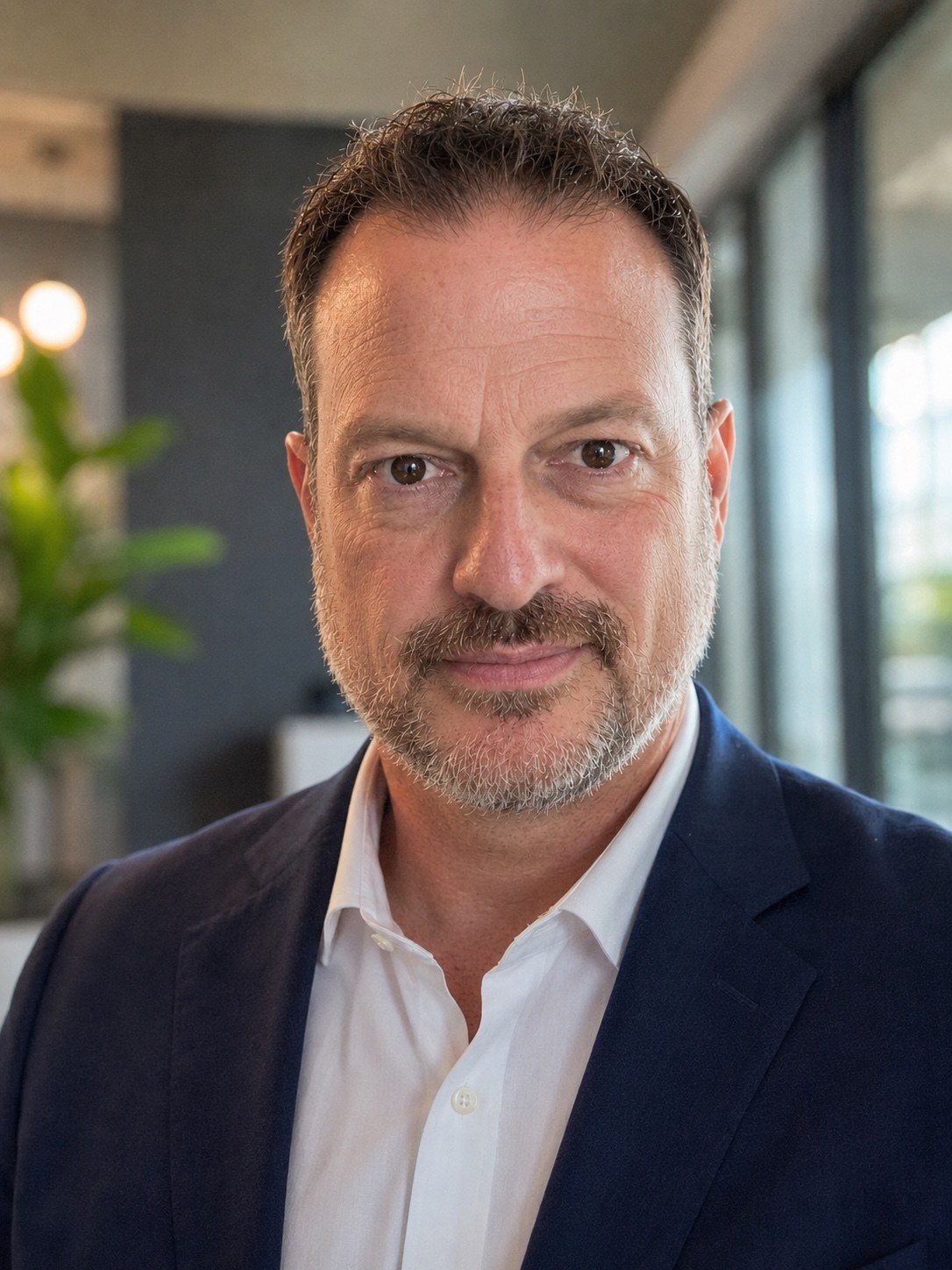
David Bryson
I have spent more than 20 years working where business problems, technology, products, and execution meet.
My career has crossed telecommunications, technology, entertainment, media, gaming, consulting, retail, and the public sector. The industries and roles have changed, but the most interesting work has usually begun when the problem was not as settled as it first appeared.
That pattern has shaped how I approach difficult work: understand what is genuinely necessary, preserve what is already working, change what needs to change, and create enough order to act.
Experience Across
Telecommunications · Technology · Entertainment · Media · Gaming · Consulting · Retail · Public Sector
The Work
The kinds of problems I tend to work on
The industries have varied. The recurring situations have been more consistent.
When the apparent problem may not be the problem that actually needs to be solved.
When different parts of an organization hold different pieces of the situation.
When a technically sound solution is aimed at the wrong frame or objective.
When an accepted constraint may be a consequence of how the system has been arranged.
When technology creates a possibility that is not visible inside its inherited use or category.
When strategy, operations, technology, customer behavior, and economics need to be understood together.
The Pattern Behind the Work
Understand the system before committing to the answer.
That way of working developed across very different environments. At Sony Online Entertainment, it included strengthening the structure, governance, and product-readiness model of a global Quality Engineering team. At Fox and Turner, the work required understanding audience behavior, partner coordination, and when a proposed technical approach was adding effort without enough value. At AT&T, day-to-day ownership of SmartVideo meant connecting product direction, operations, adoption, releases, customer behavior, and business outcomes rather than treating launch as the end of the work.
Later, emerging-technology and transformation work created different versions of the same reasoning challenge. At Verizon, Private 5G became more useful when it was framed as a platform for business outcomes rather than simply connectivity. During the Sprint-to-T-Mobile migration, the challenge was not only moving data but creating enough visibility into a complex system to understand bottlenecks and execution risk while the work was underway.
That has also made me skeptical of technology as a strategy by itself. New technology can create important possibilities, but its value depends on the problem it solves, the relationships it changes, the economics it creates, and whether the organization can actually use it effectively.
See the work behind the pattern →From Practice to Research
The questions became larger than any one project.
Over time, I became less interested in treating each difficult situation as an isolated case and more interested in the recurring problems underneath them.
I do not assume these three programs form one unified theory or that progress in one validates the others. They operate at different layers and should stand or fall on their own evidence. What connects them is a recurring way of approaching complexity: understand the system before optimizing it, distinguish necessary function from inherited form, connect relationships that are easy to examine separately, and reopen the reasoning when reality no longer supports the current model.
Continue